Google Changed the Rules for SEO Tools, and Your Rankings Data Might Be Off
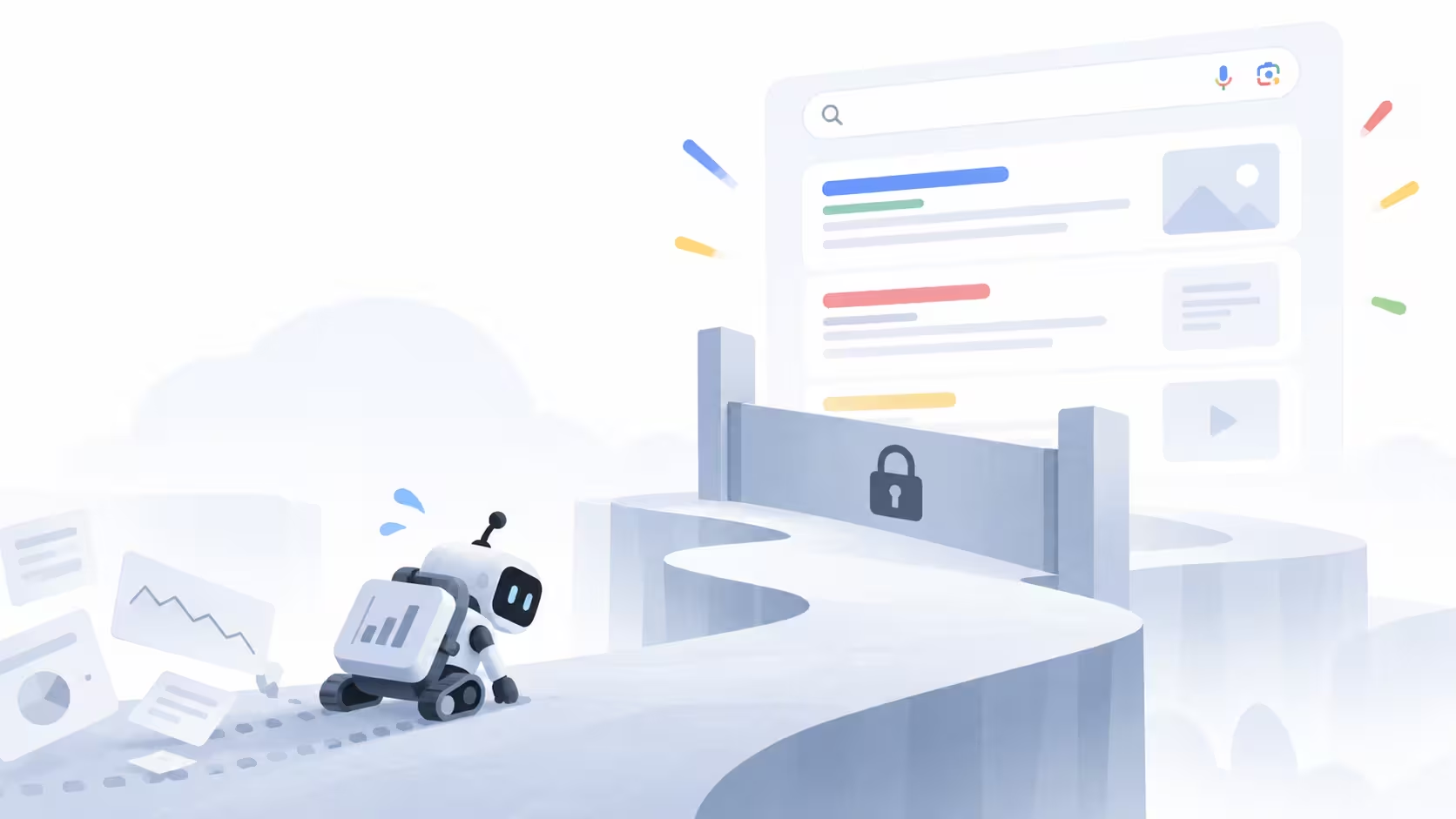
If you’ve checked your rankings dashboard lately and thought “that doesn’t look right,” you’re not imagining it. The issue isn’t your website. It’s how the tools themselves collect their data.
Here’s the easiest way to think about it. Picture Google as a massive library, and tools like Ahrefs and Semrush as companies that send robots into that library every day to walk the aisles and report back: your website is sitting in the third spot for this search, your competitor is in first, this many people are browsing this section. For years, those robots could walk right in and look around freely.
Then Google changed the locks.
What Actually Changed
Starting in 2024 and continuing through 2025 and into this year, Google has made a series of structural changes that make search results harder to collect at scale. Search pages increasingly rely on browser-like rendering, result layouts continue to evolve, and Google has reduced some of the shortcuts third-party tools historically used to pull large sets of rankings efficiently. None of this really changes the way you or I use Google. It changes what happens when an SEO platform tries to run millions of searches automatically every day.
Google didn’t do this specifically to break rank trackers. It’s a broader effort to slow down large-scale automated scraping of search results. But rank-tracking tools depend entirely on that kind of automated access, so when the locks changed, some of them got locked out - at least temporarily. Semrush and Ahrefs both publicly acknowledged real disruption from this, with reports of stale data, gaps in reporting, and numbers that didn’t match what a real search actually showed.
Why This Actually Matters For You
If you’re a local business owner watching a rankings dashboard, this isn’t just an interesting technical footnote. It means:
- A ranking drop in your dashboard might not be a real ranking drop. It might just be a robot that couldn’t get a clean look that day.
- Missing keywords aren’t necessarily keywords you lost. They might be keywords the tool simply failed to find during a blocked crawl.
- Traffic estimates can be built on incomplete data, which means the “opportunity” a tool flags for you might be based on numbers that were never fully accurate to begin with.
The frustrating part is that these are premium tools you’re paying for specifically because they’re supposed to be excellent at collecting and organizing this exact kind of information.
What We Do About It
We treat third-party rank-tracking data as a helpful signal, not the final word. Google Search Console is the one source that shows you real data straight from Google itself - actual impressions, actual clicks, and Google’s own average-position data, no robot walking through a library trying to guess. When a client’s dashboard number looks strange, that’s the first place we check before assuming anything has actually changed.
The bigger picture hasn’t changed either: rankings built on real content, real structured data, and a real site architecture hold up regardless of which tool is having a rough week collecting data. That’s the foundation our SEO & Search Strategy work is built on - not chasing a single dashboard number, but building the kind of technical and content groundwork that shows up correctly no matter how any one tool is measuring it that day.
If a rankings report has you second-guessing what’s actually happening with your site, let’s take a look together at what Search Console is really showing.